Write an essential-load list
Begin with functions rather than products: safe lighting, access to warnings, communication and any medically necessary equipment. Heating, refrigeration and pumping may also be priorities, but they can require much more power than a phone. Record the actual equipment, its input requirements and how long it must operate. Avoid building a plan around an appliance category without checking the model you own.
If someone relies on powered medical equipment, contact their clinician, supplier and utility before an outage. A general-purpose battery may not be suitable, and a utility registration scheme does not guarantee uninterrupted service. Ask about approved backup arrangements and a relocation plan. This website cannot assess compatibility or determine how much medical backup is sufficient.
Separate power from stored energy
Watts describe the rate at which energy is used or delivered. Watt-hours describe an amount of energy. A power station needs both enough stored energy for the intended duration and enough output capacity for the connected load. Some appliances briefly demand more power when starting, so a continuous output figure alone may not establish compatibility. Check the maker’s surge specifications and limitations.
A rough runtime estimate divides usable watt-hours by average load in watts. For illustration, 240 usable watt-hours divided by a steady 20-watt load gives 12 hours. This is arithmetic, not a product promise. Advertised capacity may not be fully available at the outlet, and conversion losses, temperature, battery age and changing loads can reduce runtime. Verify performance safely before relying on it.
- Capacity
- Watt-hours: energy stored
- Output
- Watts: delivery limit
- Safety source
- CDC: carbon monoxide
Choose simple lighting and information backups
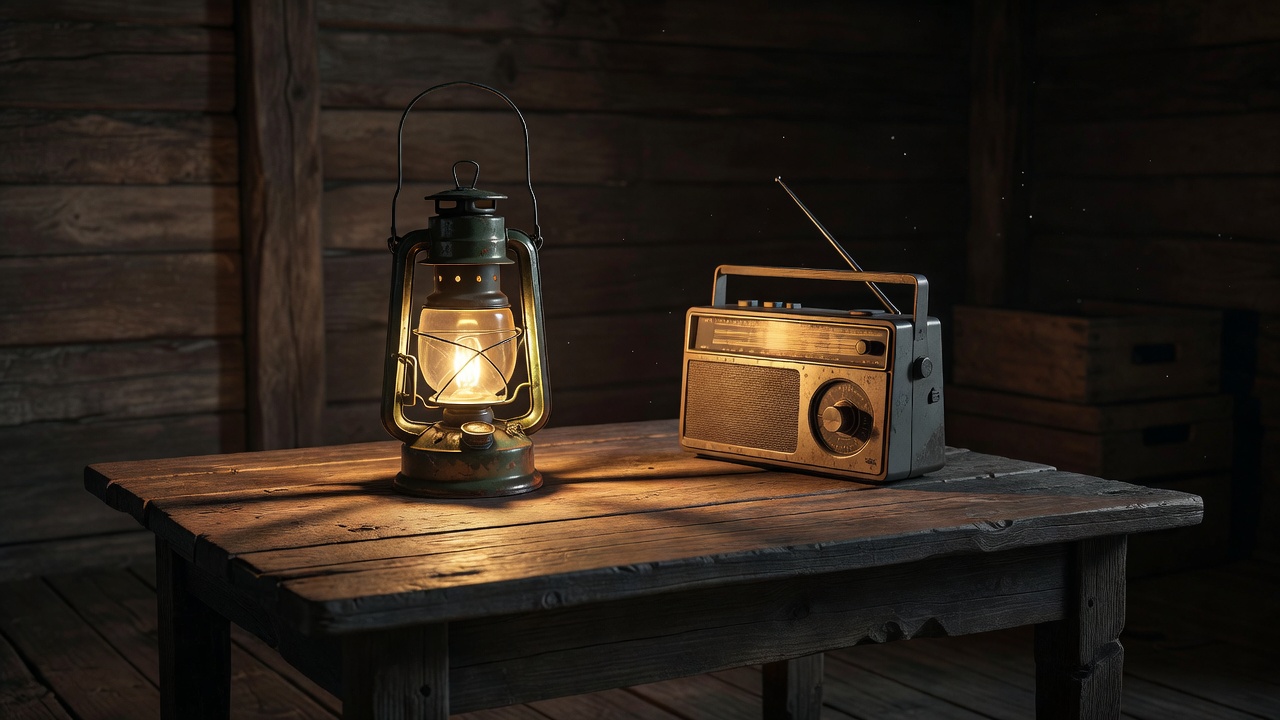
An LED lantern or headlamp can provide useful light without an open flame. Check controls, runtime at the brightness you will actually use and the availability of replacement batteries. Store compatible spare cells safely and avoid mixing old and new cells or different chemistries. Rechargeable lights are useful only if they are charged and can be found in the dark.
A battery-powered radio can provide information when home internet is unavailable. In the United States, a compatible NOAA Weather Radio receiver can receive broadcasts where service and reception are available. Check local coverage and test the receiver in its intended location. Elsewhere, identify an appropriate local broadcast service. Keep written contact details and a meeting plan because mobile networks can also be disrupted.
Recharging is part of the specification
A large battery with no practical recharge route may cover only the first part of an outage. Read its charging limits, required adapters and permitted temperature range. Solar charging depends on sunlight, panel placement, weather and electrical compatibility. A panel’s headline output is measured under defined conditions; shaded windows, clouds and short winter days can make actual delivery much lower.
Keep batteries away from water and heat, and follow instructions for storage state of charge. Stop using a pack that is swollen, damaged, leaking or behaving abnormally. Do not place it where a failure would block an exit. Certification claims should identify a relevant standard and a verifiable certification body; a logo or the phrase “tested” is not enough. UL Solutions provides information on safety certification, but certification never removes the need for correct use.
| Question | Where to check |
|---|---|
| Can it start the load? | Appliance demand and battery or generator output specifications |
| How long will it last? | Measured load, usable capacity and a safe test |
| How will it recharge? | Compatible input, available supply and weather conditions |
Generators require a separate safety plan
A portable generator is not simply a larger battery. It introduces exhaust, fuel, fire, noise and electrical risks. Safe outdoor placement must be possible without endangering your home or neighbouring buildings. Keep it dry using only arrangements permitted by the manufacturer; never solve rain exposure by moving it into a garage. Allow it to cool before refuelling and follow fuel-storage rules.
Never connect a generator to a household wall outlet. Backfeeding can injure utility workers and others. Any connection to building wiring requires suitable transfer equipment installed by a qualified professional in accordance with local requirements. Maintain battery-backed carbon monoxide alarms, but remember that alarms do not make an unsafe generator location acceptable.
Maintenance check: outage equipment
Test lights and radios, inspect cables, review battery storage instructions and confirm that essential adapters are together. Check alarm expiry and battery requirements. Service generators on the manufacturer’s schedule and practise only in a safe outdoor location.
Food, medicines and indoor temperatures need their own plans during prolonged loss of power. Follow official food-safety and medical-storage advice rather than relying on touch or appearance. If conditions become unsafe, use your relocation plan. The most useful backup system is one whose limits you already understand.